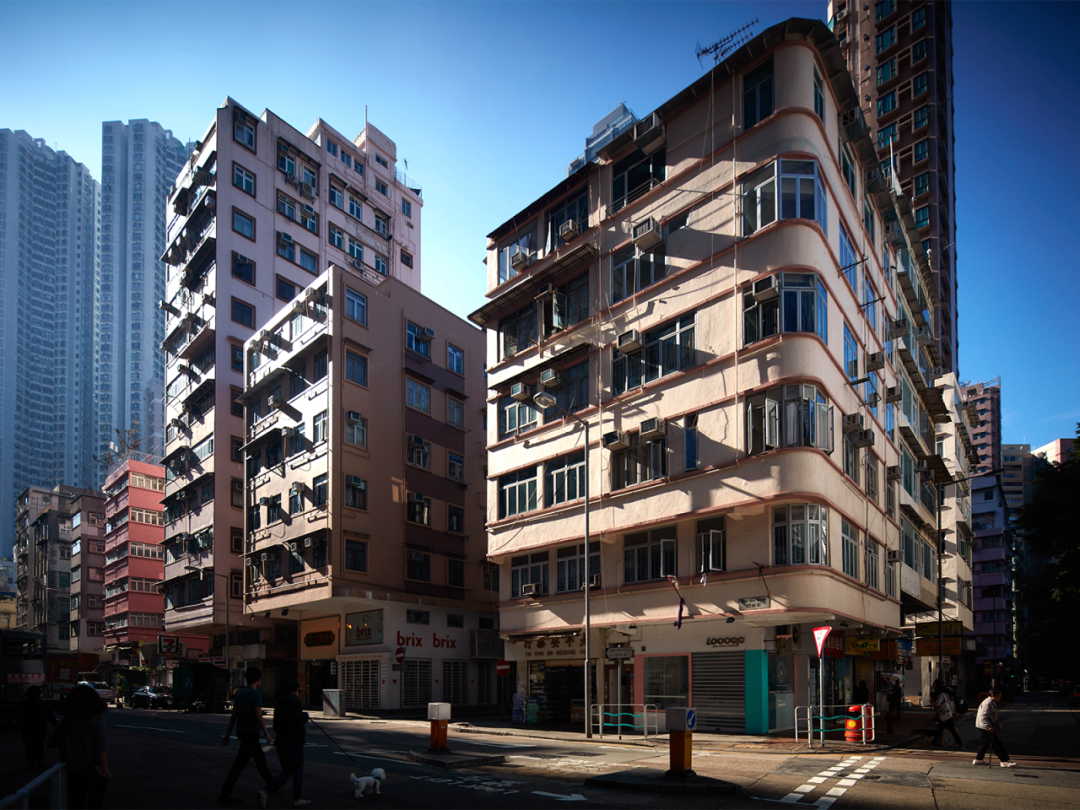
Hong Kong Art Month 03 | Two Hong Kongs, 10 Minutes Apart: Central and Tai Hang in Conversation
Every March, the global art world turns its attention to Hong Kong. Gallerists, collectors, curators and artists fly in from around the world, transforming the city into a week-long stage where art takes centre stage.
For anyone in the art world, the calendar inevitably revolves around Art Basel Hong Kong, held at the Hong Kong Convention and Exhibition Centre (HKCEC) in Wan Chai. This year, the fair brought together 240 galleries from 41 countries and territories, with more than half hailing from the Asia-Pacific region. The fair itself also introduced several notable developments: Encounters was curated by a four-person curatorial team for the first time; Echoes made its debut as a new sector; Film was curated by Ellen Pau; and the digital art project Zero10 marked its Asian premiere in Hong Kong.
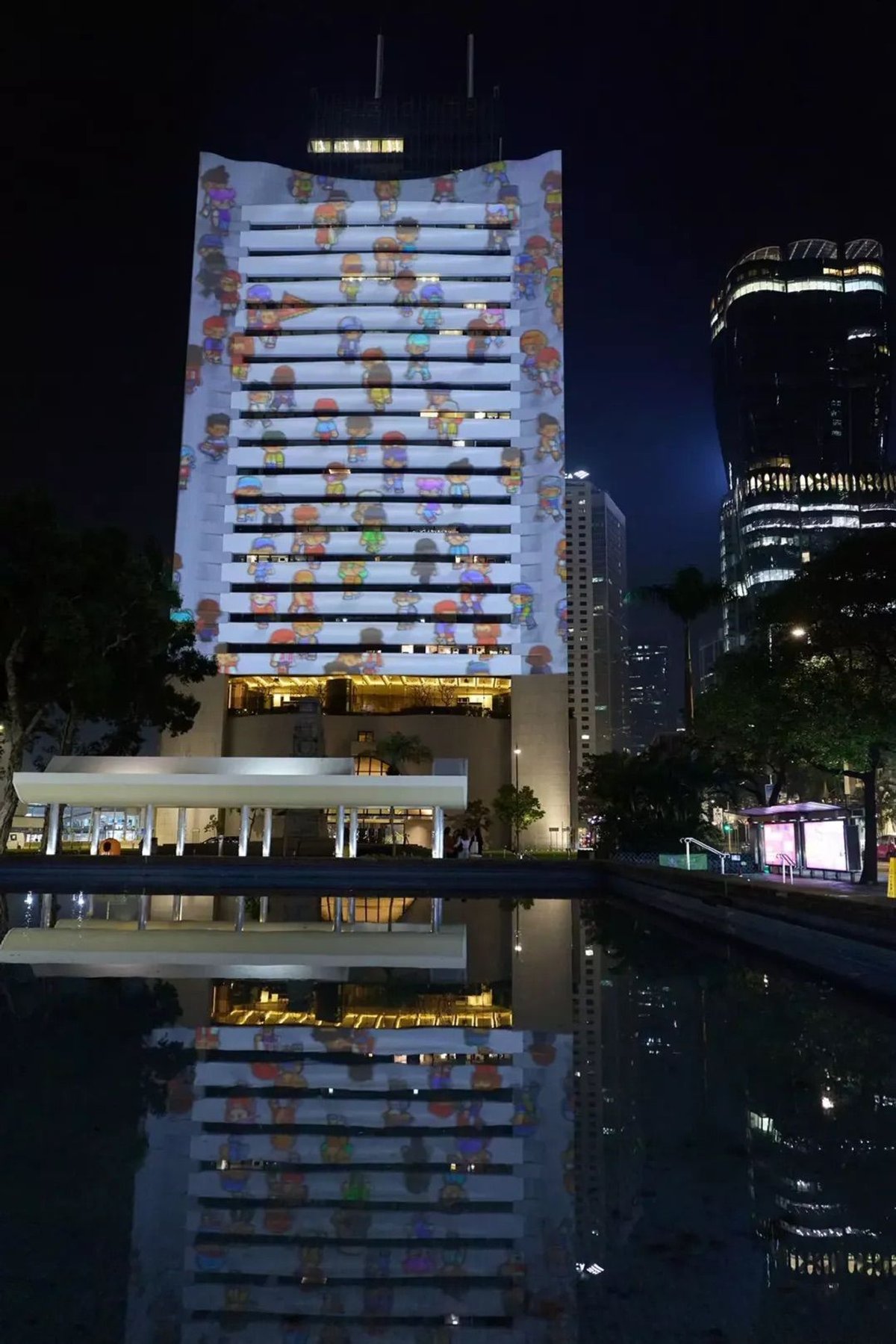
Interestingly, these changes were not confined to the exhibition halls. This year also marked the first time Art Basel's digital art programme extended beyond the fairgrounds, adding a new outdoor artwork to Central's evening streetscape—one that invited passers-by to pause and engage.
At the same time, international galleries have been rethinking their footprints while a generational shift is reshaping the collector landscape, subtly redrawing Hong Kong's art ecosystem. Beyond transactions, an increasing number of people are seeking art experiences that feel more local and woven into everyday life. Beyond the traditional white cube, new and less easily defined spaces are quietly taking root.
On Hong Kong's cultural map, two neighbourhoods separated by little more than a 10-minute drive capture these parallel transformations from strikingly different perspectives.
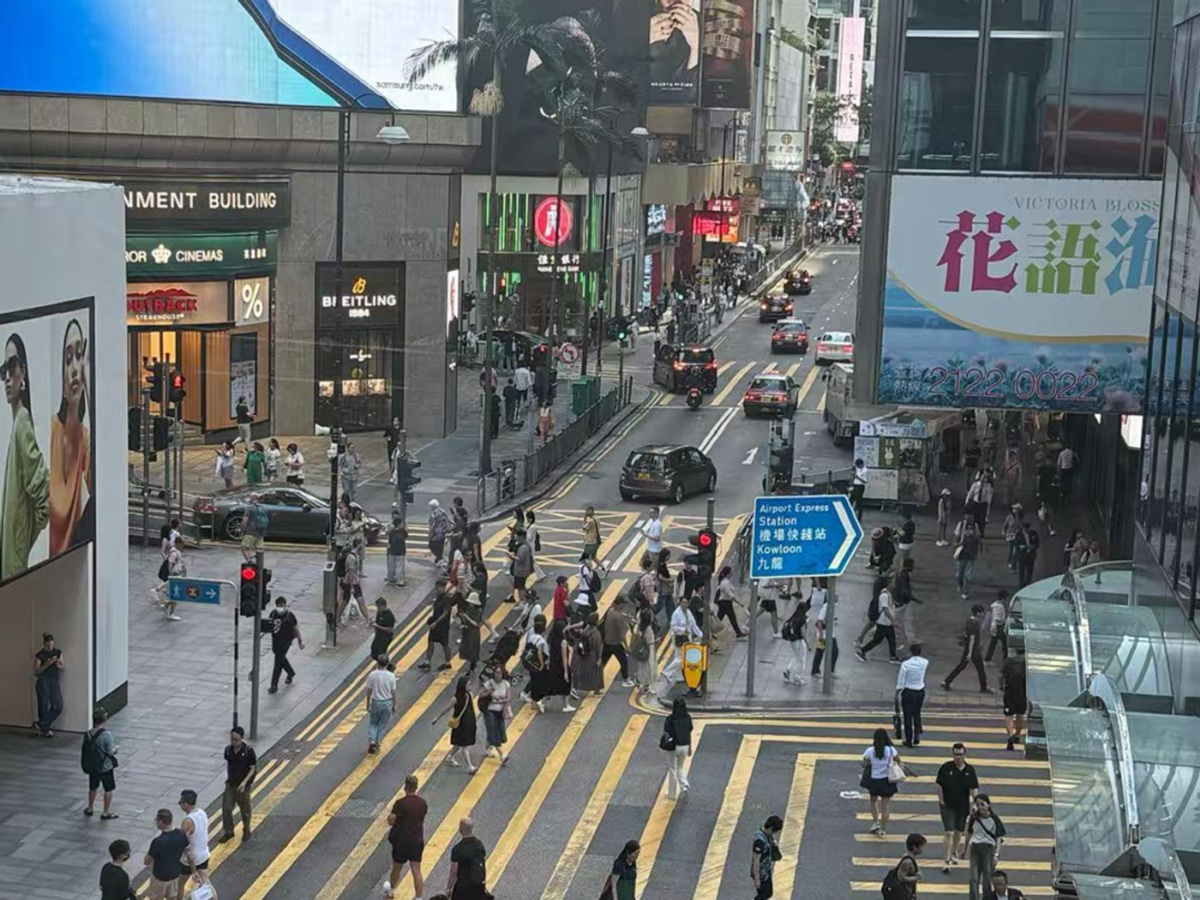
Part 1 | Central: The Enduring Heart of Hong Kong's Art Scene
If there is one gallery in Central that best understands the art of adapting to change, Kwai Fung Hin would surely be high on the list.
Founded 35 years ago, the gallery began its journey at Aberdeen Marina Club before relocating to Ice House Street in Central in 2004. It was later invited to move into Tai Kwun, before settling into its current home in Entertainment Building, also in Central. Each move has represented more than a simple change of address—it has been a considered response to the shifting dynamics of Hong Kong's art ecosystem.
"Tai Kwun is a beautiful architectural landmark and one of Hong Kong's most important heritage sites, but it attracts far too many visitors," says Catherine Kwai, Founder and Director of Kwai Fung Hin, reflecting on the gallery's most recent relocation. "A gallery should offer collectors a quiet environment in which to appreciate art and engage in meaningful conversations—not simply another place for people to tick off their sightseeing list."
The gallery therefore relocated to the ninth floor of Entertainment Building, in the heart of Central—not to retreat from the city's cultural centre, but to better serve collectors with a genuine interest in art. The new space has been thoughtfully designed with dedicated viewing rooms, each equipped with digital displays that present artists' practices and bodies of work in greater depth.
"Today's collectors are highly informed," Kwai says. "They want to understand an artist from multiple perspectives before making a decision. Purchases are rarely made on impulse."
In her view, Central's appeal has remained remarkably consistent: Hong Kong's favourable tax regime, its position as a global financial hub, excellent connectivity, and the concentration of international collectors.
"High-net-worth clients have incredibly busy schedules," she explains. "They come to Central for meetings or business, then stop by galleries while they're here. If you expect someone who's only in Hong Kong for two or three days to make a dedicated trip to Wong Chuk Hang, that's a much harder proposition."
Yet the challenges facing Central are equally evident. Rising rents, the departure of some international galleries, increasingly sophisticated collectors, and wider economic and geopolitical uncertainties have all reshaped the landscape. Kwai Fung Hin's response, however, has been to invest in something more fundamental: scholarship.
The gallery established a dedicated research and archives department in Shanghai, hiring art historians to compile detailed chronologies and catalogue archives for its represented artists.
"We began building artist archives in 2018," says Kwai. "Earlier this year, we completed the online archive for Teo Eng Seng, the 87-year-old Singaporean artist who joined the gallery in 2025. It took us a year and a half to document the full trajectory of his practice, spanning from the 1960s to the present day."
That scholarly commitment has also extended into the secondary market. Since publishing a monograph on Zao Wou-Ki in 2010, Kwai Fung Hin has devoted itself to researching and promoting twentieth-century modern art.
"The distinction between the primary and secondary markets is becoming increasingly blurred," Kwai observes. "Today, galleries are no longer solely representing contemporary artists—they are also actively participating in the secondary market."
"Regardless of how markets shift in response to economic or geopolitical change, once people attain a certain level of wealth, they continue to seek culture and intellectual enrichment. Only galleries with genuine expertise can remain relevant over the long term."
It is this steadfast commitment to scholarship and professionalism that has enabled Kwai Fung Hin to navigate more than three decades of change—and that continues to underpin the gallery's confidence in both Hong Kong and the future of its art scene.
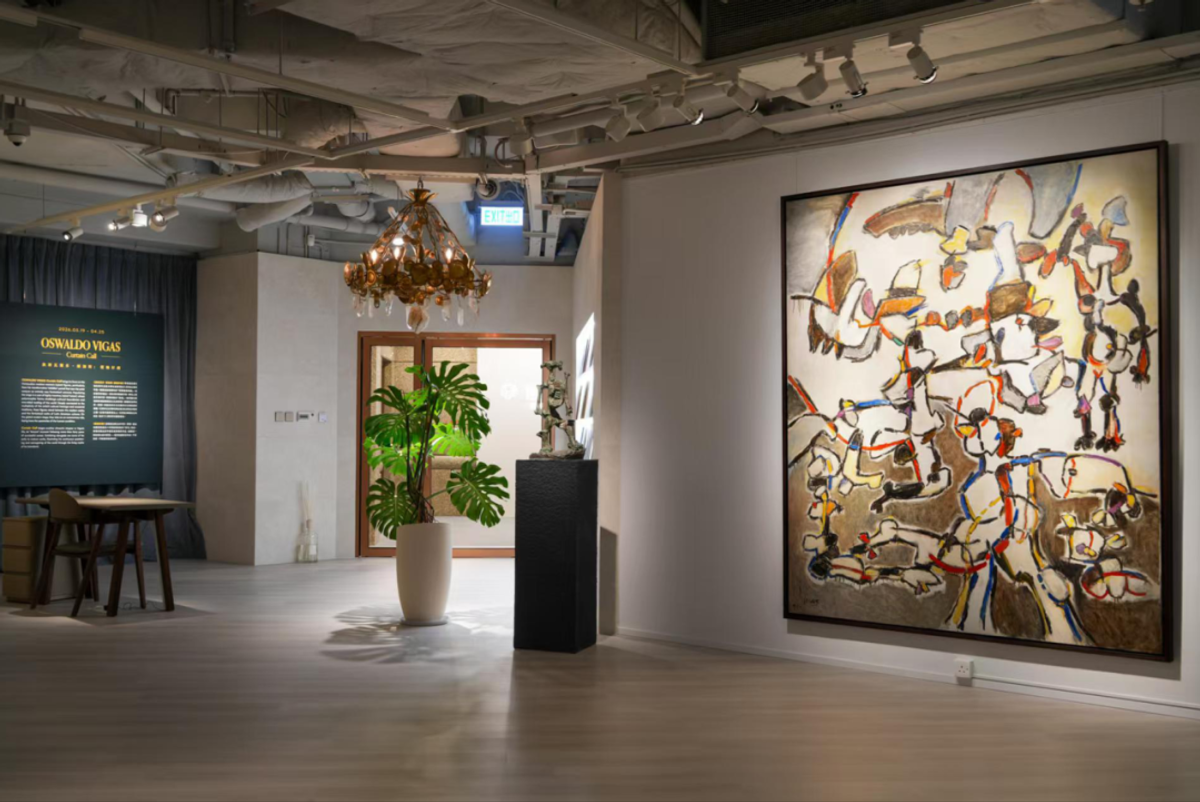
Part 2 | M+M Gallery: Why a Young Gallery Still Chooses Central
If Kwai Fung Hin represents the enduring strength of an established gallery, M+M Gallery offers another perspective: why would a gallery founded just a year ago still choose to put down roots in Central?
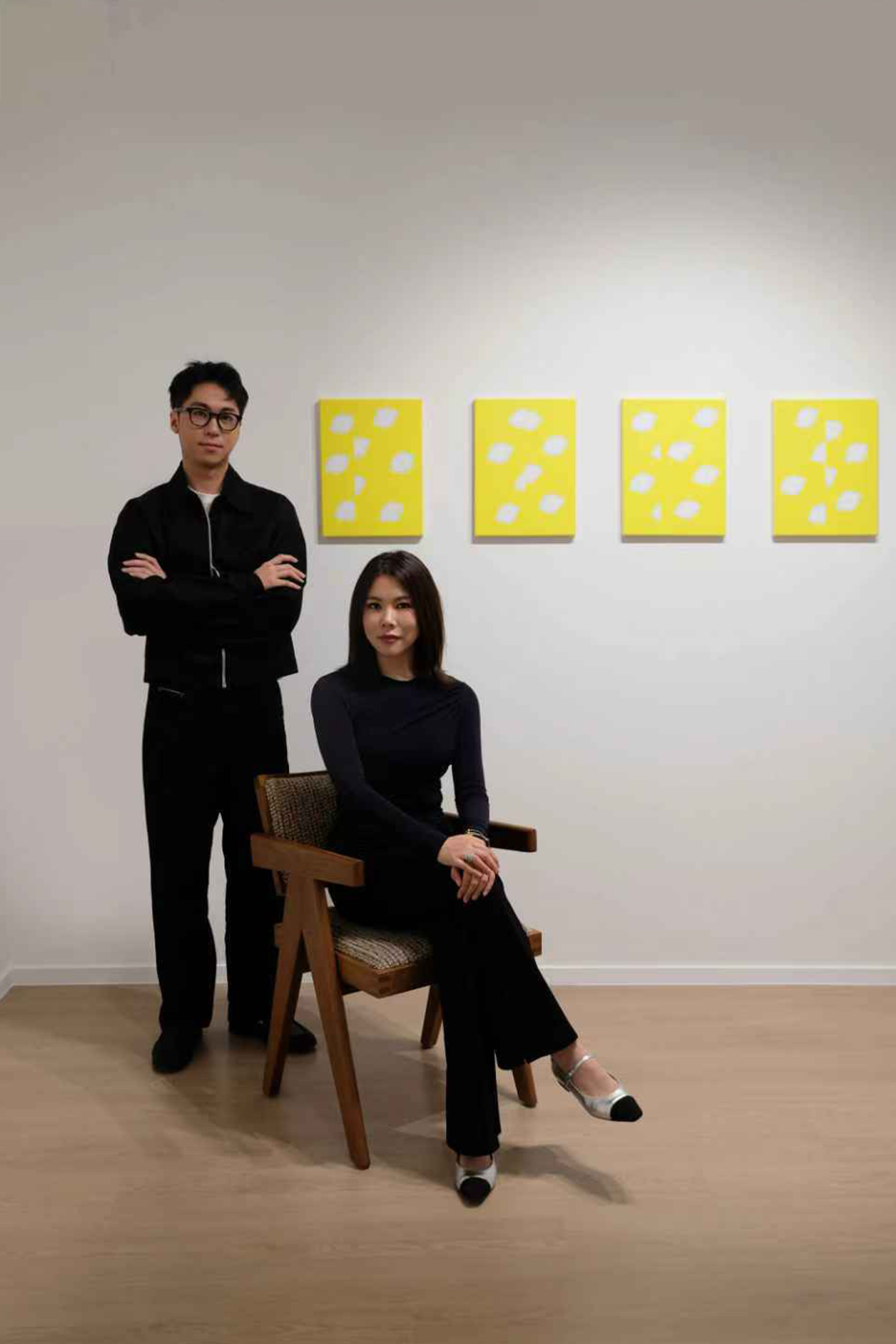
In March 2025, M+M Gallery opened on the 19th floor of Winsome House on Wyndham Street in Central (Unit 1902, Winsome House, 73 Wyndham Street, Central, Hong Kong SAR). Its two young founders, Moe Zhao and Steve Shih, combined the Chinese characters Meng and Ming from their respective names to create the gallery's Chinese name.
When searching for a location, they did consider other neighbourhoods. In the end, however, every alternative was ruled out for the same reason: distance.
"Most of the collectors and friends we know are still based in Central," says Zhao. "People come here for meetings, to catch up with friends, and it's easy to drop into a gallery afterwards. The difference in rent isn't nearly as dramatic as people imagine. For a space of the same size, Central might cost twice as much as Wong Chuk Hang—not ten times more. Giving up that level of convenience simply isn't worth the savings."
More importantly, they believe Central's concentration of art institutions remains impossible to replicate. From M+M Gallery on Wyndham Street, Tai Kwun is just a one-minute walk away, H Queen's can be reached in five minutes, and both Pedder Building and Sotheby's Hong Kong's flagship space are within a ten-minute walk. "The auction houses are here. Tai Kwun is here. Everything that matters is within walking distance," adds Shih.
That accessibility has a direct impact on whether collectors choose to visit. "An international collector might only have two days in Hong Kong," Zhao and Shih explain. "They're not going to make a dedicated trip to Wong Chuk Hang. But they can easily spend an afternoon visiting all the galleries in Central."
Asked whether Central is losing its position as Hong Kong's premier gallery district, both founders are unequivocal. "When an international gallery leaves Central or closes its Hong Kong space, it's usually an individual business decision rather than a reflection of the district as a whole," says Shih. "In fact, we wouldn't be surprised if some galleries eventually move back from Wong Chuk Hang. Not every gallery needs soaring ceilings, but Central's convenience is irreplaceable."
After a year in operation, most visitors to M+M Gallery are still existing clients and their friends. Yet unexpected encounters have become an encouraging part of everyday life: around 20 walk-in visitors now discover the gallery each week, and some even call ahead simply to ask whether they are welcome to visit.
The founders have also noticed a shift in the pace of the larger galleries. "A few years ago, everything felt incredibly competitive and fast-moving," they say. "Now the major galleries seem more willing to slow down. Exhibitions stay on view for three or four months, and they're increasingly bringing works to Asia that require more time and deeper engagement. We see that as a very positive development."
"To operate only in the primary market without understanding the secondary market is a risky strategy," they say. Their plans for the future are equally measured.
"We'll probably stay in this space for the next three years," says Shih. "Within five years, we'd like to expand to a second floor and create a more refined experience for our visitors. The space may be limited, but that doesn't stop us from presenting projects that are engaging, thought-provoking and intellectually rewarding."
Part 3 | Tai Hang: A Different Way to Grow
If Central's story revolves around transactions and efficiency, Tai Hang tells a different one—about relationships, rhythm and community.
In 2019, Alex Chan returned to Hong Kong from London. Opening a gallery was never part of the plan. Instead, he began by organising a handful of pop-up exhibitions to test the waters. Their positive reception gradually convinced him that it was time to look for a permanent space.
"I viewed a lot of properties, but none of them felt right," Alex recalls. "Then an estate agent showed me an old Hakka house. It had a termite problem, so it wasn't suitable for a gallery. He said, 'If you like old buildings, there's another one next door.'"
That building would become the main home of THE SHOPHOUSE—an entire four-storey historic townhouse. Before Alex moved in, its exterior had been painted a glaring shade of pink by a previous tenant. He spent two months painstakingly cleaning and restoring the façade to reveal the character of the original building beneath.
"I never wanted to put art on a pedestal," Alex says. "It should exist as part of everyday life."
That philosophy has shaped THE SHOPHOUSE from the very beginning. When it opened in 2020, the space sold ceramics, vintage designer clothing and tea alongside artworks, only gradually refining its focus to contemporary art and ceramics. In 2025, THE SHOPHOUSE expanded into a second venue just across the street, dedicated to ceramics and collectible design.
"At first, people in Hong Kong thought we were trying to do too many things," Alex says with a laugh. "But I still believe art and everyday life shouldn't be separated."
In Tai Hang, they rarely are. Neighbours walking their dogs often stop to peer through THE SHOPHOUSE's windows. Young people drop in after coffee on weekends to see the latest exhibition. Sometimes, people even pause outside at night to watch what is happening inside. During the pandemic, when international visitors disappeared, it was local residents who became the gallery's most familiar faces.
"Tai Hang doesn't really have an established art ecosystem," Alex says. "What it does have is life. There are old buildings, a real neighbourhood atmosphere, and a quality that makes people want to stay."
For Alex, Tai Hang's uniqueness lies in its organic character. The neighbourhood has escaped large-scale redevelopment and master planning, allowing it to evolve naturally over time. More than ten independent cafés attract young professionals and expatriates, while decades-old neighbourhood eateries continue serving long-time residents who go about life at their own pace. "It's that contrast that makes Tai Hang so compelling."
As for whether Tai Hang could become home to more galleries, Alex remains cautiously optimistic. Having spent five years building his practice there, he understands the district's character better than most. "It depends on the kind of art you're showing and the audience you're trying to reach," he says. He points to one practical consideration: most of Tai Hang's historic buildings have relatively low ceilings and are not particularly convenient for transporting large-scale works. For galleries that require expansive exhibition spaces and frequent art handling, the neighbourhood presents clear limitations. "But if your programme is rooted in everyday life and can grow naturally alongside the local community," he says, "Tai Hang is just right."
Part 4 | Redefining the Art Landmark
That sense of being "just right" was precisely what one art initiative set out to capture this March.
The project is ArtHouse Tai Hang, founded by Jacky Ho, a veteran of Hong Kong's art world. Asked to describe Tai Hang, he offers three phrases: a time machine, the soul of Hong Kong, and a creative neighbourhood.
"It feels like a time machine," he says, "because Tai Hang is one of Hong Kong's oldest neighbourhoods. The historic buildings that remain here offer a glimpse into another chapter of the city's past."
For Ho, the "soul of Hong Kong" lies in its people. Tai Hang is a neighbourhood where different cultures and communities coexist naturally. Wealthy residents live alongside sanitation workers who begin their rounds before dawn. While preparing exhibition spaces, cleaners would stop to help move chairs, while staff from the noodle shop next door would excitedly promise to come by once everything opened.
"Everyone is equal here," Ho says. "You might be a billionaire, or you might be collecting rubbish for a living. But when you sit down together, you're simply having a conversation."
With 16 years of experience in the auction world, Ho knows Central better than most. For years it was the centre of his professional life. Today, having shifted his focus from the marketplace to the neighbourhood, he sees Hong Kong's evolving artistic landmarks through a different lens.
He describes Central today as being in a period of transformation. "The entire Hong Kong art ecosystem is undergoing a transition in the post-pandemic and AI era."
Looking back over the past two decades, Ho recalls how the market evolved from classical Chinese paintings and antiques to Chinese contemporary art, then Asian contemporary art, and finally an increasingly international landscape. "Twenty years ago, each major trend lasted five or even ten years. Today, things can change every year—or even every season." In his view, what has changed is not the collectors themselves, but the way the market operates. "The collectors are still here—they're still buying art. What's changed is the relationship between supply and demand. When there are so many auctions, galleries and art fairs competing for attention, perhaps galleries should ask whether their resources are better spent not just on rent, but on supporting artists' practices and developing museum-quality projects."
Yet he is equally convinced that Central's importance has not diminished. "The flagship spaces of the two major auction houses in Central continue to educate audiences and inspire new generations of collectors," Ho says. "And having Gagosian, David Zwirner and Hauser & Wirth here sets a benchmark for the entire industry. For those still building their careers, they represent something to aspire to."
Catherine Kwai shares that view. In her eyes, Central has become an industry benchmark not simply because so many leading galleries are concentrated there, but because it embodies the shared memories and professional journeys of generations of people who have helped shape Hong Kong's art scene.
For Moe Zhao and Steve Shih, founders of M+M Gallery, Central's value also lies in its clarity of purpose. "If art events in other districts tend to attract people looking for a social experience," says Shih, "Central is much more straightforward. People come here to buy art. Everyone understands why they're here." That clarity creates a more efficient relationship between galleries and collectors: visitors know what they are looking for, and galleries know how to serve them. In their view, this direct commercial dynamic remains the foundation of the art market—and the reason Central continues to be an irreplaceable cultural landmark.
Ho, however, sees Hong Kong's diversity as its greatest strength. "The beautiful thing about Hong Kong today is its flexibility," he says. "We have Central, Wong Chuk Hang, Tai Hang and the Convention Centre. Within these different districts, you'll find Michelin-starred restaurants alongside neighbourhood noodle shops. For Asia's art market to mature, every part of the ecosystem needs room to flourish."
Tatler:
From Central to Tai Hang is a journey of little more than ten minutes by car.
One neighbourhood has evolved by adapting to change; the other has grown by moving at its own pace. One is defined by commerce and connoisseurship, the other by community and chance encounters. Together, they represent two distinct yet complementary visions of what an art landmark can be.
Every March, Hong Kong becomes a city-wide celebration of art. Whether among Central's soaring skyscrapers or Tai Hang's slower, more intimate streets, art is no longer confined to a single destination. Instead, it unfolds across laneways, façades, neighbourhoods and the city after dark—wherever you go, art becomes part of the experience.
To explore Hong Kong during Art Month, visitors can consult the Hong Kong Tourism Board and Art Central's digital Hong Kong Art Month Guide, or follow Hongkong Land's Art Walk in Central, a curated journey through the district's rich artistic and cultural landscape.
(Originally published on the WeChat Official Account Tatler的朋友们. By Tatler China.)