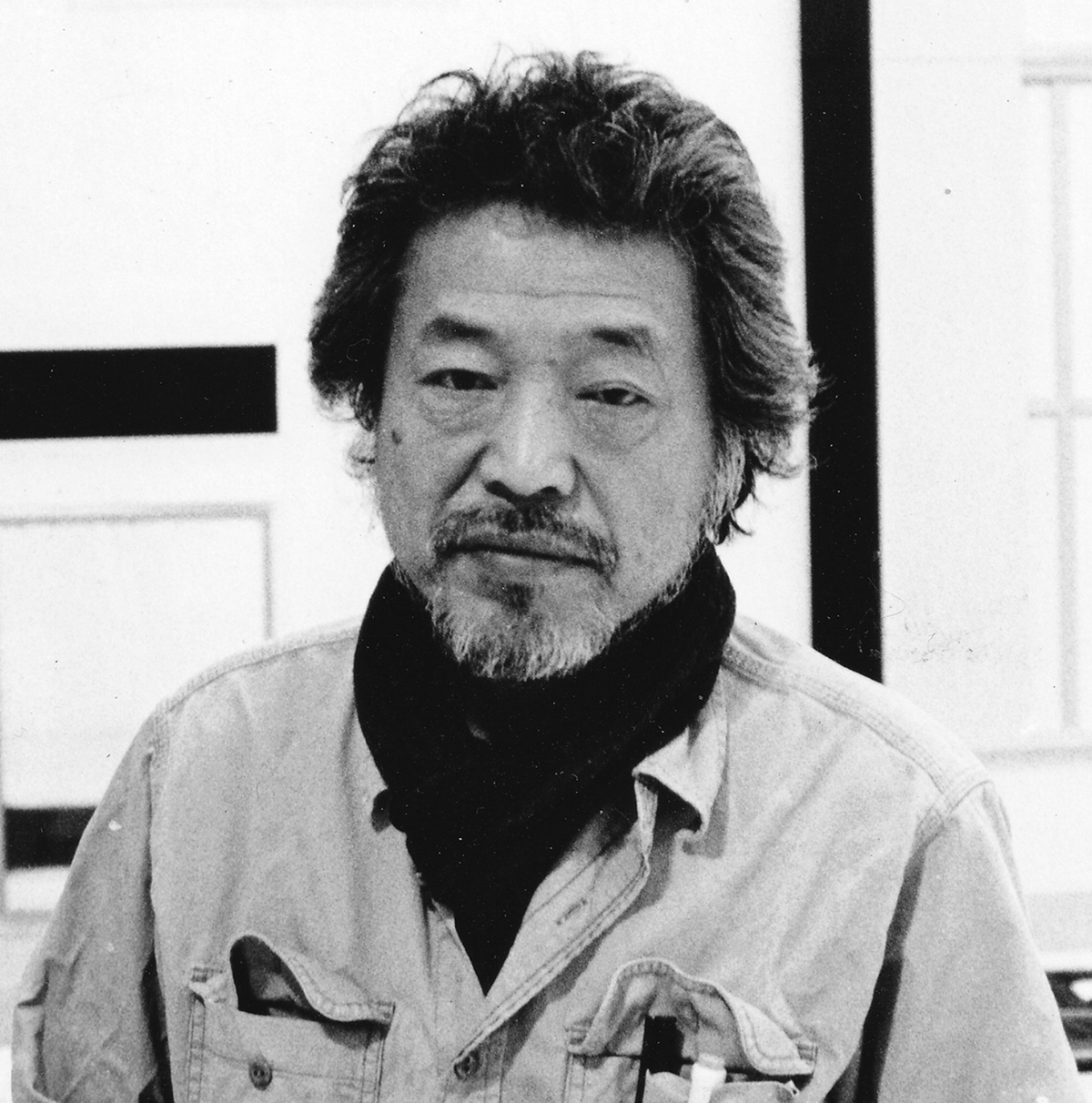
Noriyuki Haraguchi
Japan
1946-2020
Noriyuki Haraguchi was a central figure in Japan’s post-war avant-garde and a representative artist of Mono-ha, Asia’s seminal minimalist art movement.
Graduating from the Oil Painting Department of Nihon University, Tokyo, in 1970, his artistic vision was deeply shaped by the anti-Vietnam War and U.S.-Japan Security Treaty protests of the era. Focusing on the intersections of militarism, heavy industry, and socio-political issues, he explored material essence and built a distinct artistic language through masterful use of industrial materials such as steel, oil tanks, and waste machine oil. Since the 1960s, he had developed an aesthetic system of restrained texture and subtle political undertones, directly engaging with contemporary socio-political realities.
He was the subject of several major retrospectives, including Noriyuki Haraguchi at the Städtische Galerie im Lenbachhaus, Munich (2001); Society and Matter at BankART 1929 Studio NYK, Kanagawa (2009); and a solo exhibition at the Yokosuka Museum of Art, Kanagawa (2011). In recent years, his works have also been included in a number of significant international group exhibitions, such as Das schwarze Quadrat: Hommage an Malewitsch at the Hamburger Kunsthalle, Hamburg (2007); Requiem for the Sun: The Art of Mono-ha at Blum & Poe, Los Angeles (2012); and Tokyo 1955–1970: A New Avant-Garde at The Museum of Modern Art (MoMA), New York (2012). Haraguchi's works are included in the collections of numerous important international institutions, including Tate Modern, UK; Von der Heydt Museum, Germany; Städtische Galerie im Lenbachhaus and Kunstbau, Germany; Kröller-Müller Museum, Netherlands; Tehran Museum of Contemporary Art, Iran; Kravis Collection, USA; Toyota Municipal Museum of Art, Japan; Fukuoka Art Museum, Japan; Oita Art Museum, Japan; Ube City Open-Air Sculpture Museum, Japan; Meguro Museum of Art, Japan; The Museum of Modern Art, Saitama, Japan; Miyanomori Art Museum, Japan; and G Foundation, Malaysia, Japan.