Hsieh Tehching
Taiwanese American
1950
Tehching Hsieh was born in Nanzhou, Taiwan in 1950. After dropping out of high school in 1967, he began painting but soon abandoned the medium, turning instead to performance art as his mode of expression. In 1974, he arrived near Philadelphia as a crew member on an oil tanker and left the ship without authorization, subsequently living as an undocumented immigrant in New York for fourteen years—a period unrecorded by any system that became the deepest soil for his lifelong inquiry into time. Hsieh lives and works in Brooklyn, New York.
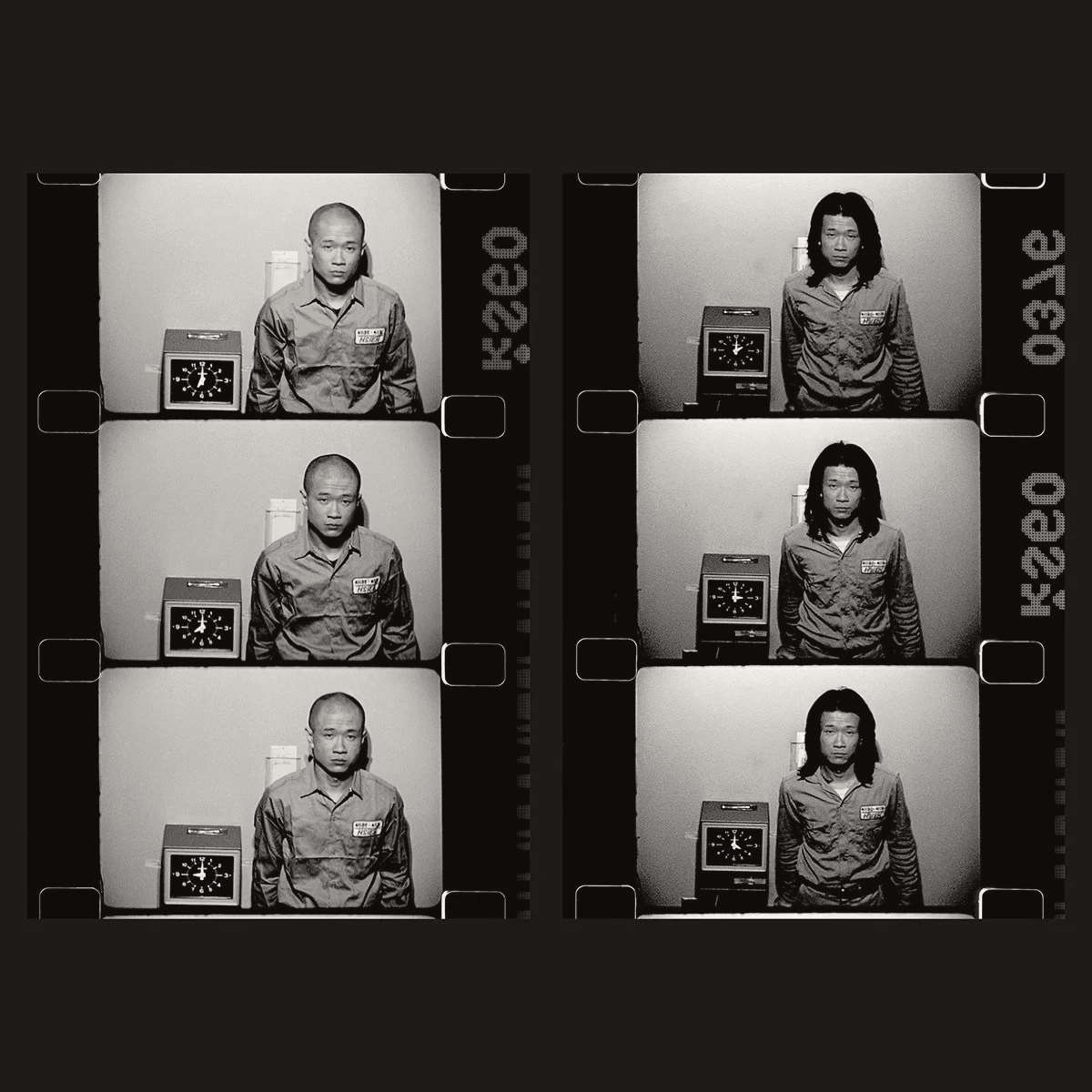
From the late 1970s through the 1980s, Hsieh pushed the proposition of "doing time" to its limits through five One Year Performances: one year confined alone in a cage, without speaking, reading, or writing; one year punching a time clock every hour, twenty-four hours a day; one year living entirely outdoors, never entering any shelter; one year tied to fellow artist Linda Montano by an eight-foot rope, never touching; and one year making no art at all. In 1986, he began his Thirteen-Year Plan, committing to make art but never show it publicly—a monumental act of self-affirmation and self-erasure that concluded in 1999. For Hsieh, living is consuming time until death, and art is no different from life.
After 1999, Hsieh's work gradually entered the international arena. In 2009, his work was exhibited at the Museum of Modern Art and the Guggenheim Museum in New York; the same year saw the publication of the monograph Out of Now: The Lifeworks of Tehching Hsieh. In 2017, he represented Taiwan at the 57th Venice Biennale with the solo exhibition Doing Time. In 2024, he donated eleven major works to Dia Art Foundation; in October 2025, Dia Beacon will present his first major U.S. retrospective, Tehching Hsieh: Lifeworks 1978–1999. He received a United States Artist Award in 2008. His work is held in the collections of Tate Modern, London; M+ Museum, Hong Kong; and Dia Art Foundation.